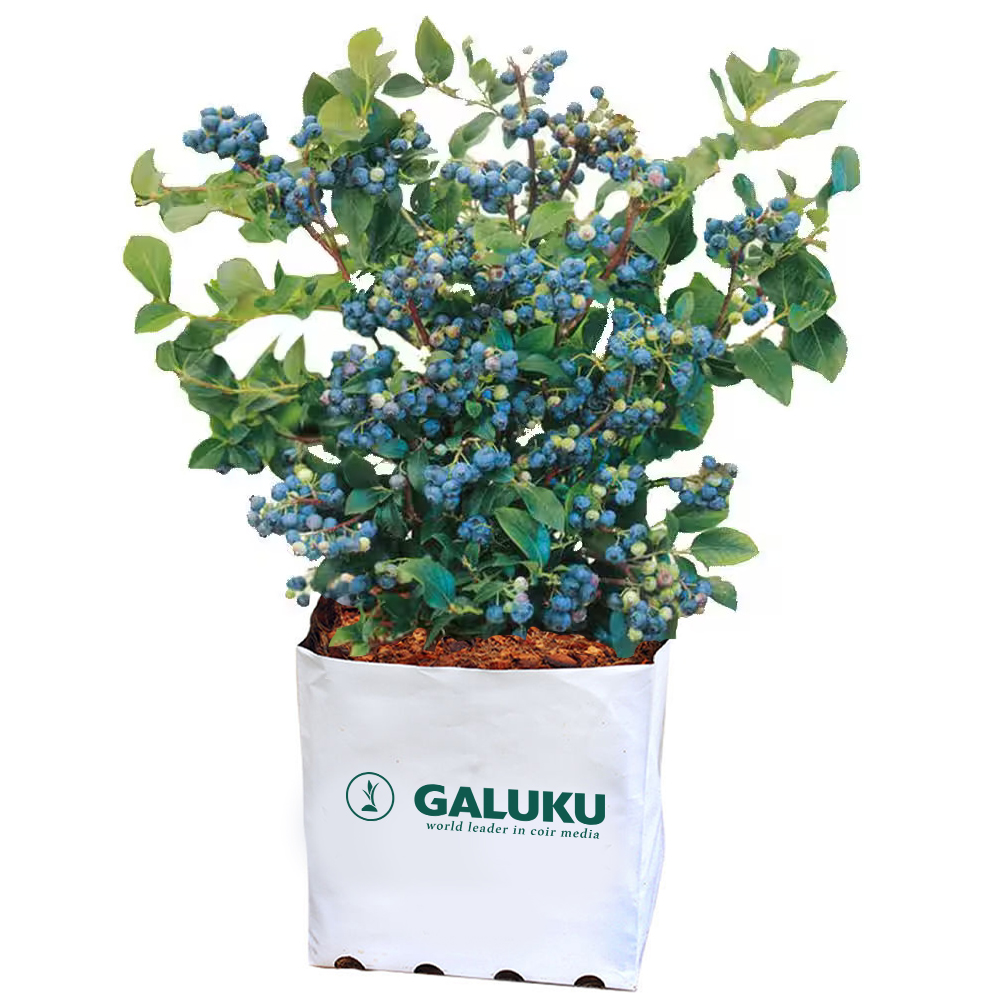
Benefits of Coco Peat for Blueberry Cultivation:
Water Retention and Drainage: Coco peat has exceptional water retention capabilities, ensuring that blueberry plants receive a consistent water supply. Simultaneously, its excellent drainage properties prevent waterlogging, which is crucial for blueberries, as they prefer slightly acidic and well-draining soil.
pH Balance: Blueberries thrive in acidic soil conditions, with an optimal pH range of 4.0 to 5.5. Coco peat naturally has a slightly acidic to neutral pH, making it an excellent medium for blueberry cultivation without the need for extensive pH adjustments.
Nutrient-Holding Capacity: Coco peat acts as a reservoir for essential nutrients, slowly releasing them to the blueberry plants over time. This ensures a steady and prolonged supply of nutrients, promoting healthy growth and optimal fruit development.
Environmental Sustainability: Utilizing coco peat in open top bags for blueberry cultivation aligns with sustainable agricultural practices. The material is renewable, biodegradable, and often sourced as a byproduct of coconut processing, reducing the environmental impact associated with traditional soil-based agriculture.
Disease Resistance: Coco peat has natural antifungal properties, reducing the risk of soil-borne diseases that can affect blueberry plants. This characteristic enhances the overall health of the crop, leading to higher yields and better-quality berries.
Choosing the Right Coco Peat Open Top Bags:
Selecting the appropriate coco peat open top bags is crucial for the success of blueberry cultivation. Consider the following factors when choosing bags for your blueberry plants:
Size and Depth: Blueberry plants have shallow root systems, so opt for open top bags with a sufficient depth for root development. A depth of 12 to 18 inches is generally recommended for blueberries.
Material Quality: Ensure that the coco peat bags are made from high-quality, durable material that can withstand outdoor conditions. UV-resistant bags will prolong their lifespan, providing long-term support for blueberry plants.
Breathability: Choose open top bags with breathable fabric to promote adequate aeration for the roots. This is essential for preventing issues such as root rot and ensuring optimal oxygen supply.
Handles and Portability: Consider bags with sturdy handles for ease of handling and transportation. This becomes particularly important if you plan to move the bags around or protect the blueberry plants during extreme weather conditions.
Coco Peat Open Top Bag Installation:
Fill the Bags: Start by filling the coco peat open top bags with a mixture of coco peat, perlite, and pine bark. This combination provides a well-balanced medium with enhanced aeration.
Planting Blueberries: Place the blueberry plants in the bags, ensuring that the root system is adequately covered with the coco peat mixture. Position the plants at the center of the bags, allowing ample space for growth.
Watering: Water the blueberry plants thoroughly after planting to settle the coco peat and initiate root establishment. Monitor the moisture levels consistently to prevent the medium from drying out, as blueberries require consistently moist soil.
Mulching: Apply a layer of organic mulch on top of the coco peat to further enhance moisture retention, suppress weeds, and regulate soil temperature. Pine straw or wood chips are excellent choices for blueberry cultivation.
Maintenance and Care:
Fertilization: While coco peat provides a reservoir of nutrients, supplementing with a balanced fertilizer designed for acid-loving plants is beneficial. Blueberries benefit from regular feeding during the growing season.
Pruning: Perform routine pruning to encourage air circulation and remove dead or diseased branches. Pruning also helps in maintaining an optimal shape for the blueberry bushes.
Pest and Disease Management: Keep an eye out for common pests and diseases affecting blueberries, such as aphids, mites, or fungal infections. Coco peat’s natural resistance to some diseases provides an added layer of protection, but regular monitoring is essential.
Harvesting: Blueberries are typically ready for harvest in late spring to early summer. Harvest ripe berries carefully to avoid damaging the delicate fruit. Coco peat bags make harvesting easier, especially when compared to traditional in-ground cultivation.
Conclusion:
Coco peat open top bags offer a versatile and sustainable solution for blueberry cultivation, addressing key challenges associated with soil-based methods. By harnessing the water retention, pH balance, and nutrient-holding properties of coco peat, growers can create an optimal environment for blueberry plants, resulting in healthier bushes and a bountiful harvest. As the demand for fresh, locally grown produce continues to rise, incorporating innovative and eco-friendly practices like coco peat bag cultivation ensures a fruitful future for blueberry growers and sustainable agriculture as a whole.